Explore our comprehensive Garden Clearance Checklist to make your garden tidy, safe, and ready for the season. Perfect for small UK gardens needing a fresh start.
Before you start, think about who uses the garden and how. A family garden may need clear paths and safe play space, while a wildlife-friendly garden may need you to leave some areas undisturbed.
Always work in good daylight and stop if the weather turns unsafe. Wet ground, strong wind, and poor light can turn simple jobs into risky ones.
Walk around the garden and spot problem areas
Start with a slow walk around the whole garden. Look at what is blocking access, what has grown too big, and what is damaged. This helps you decide what to do first, and it stops you from carrying waste back and forth.
Clear rubbish and larger items first. Pick up obvious items like broken pots, old wood, loose plastic, and litter. Move larger things like fallen branches, old furniture, or spare fencing panels into one clear area. This gives you space to work and reduces trip hazards.
Cut back overgrown plants and weeds. Find plants that have spread into paths, over steps, or around doors and gates. Cut back in small sections so you can see what you are doing. For weeds, pull from the base where possible, and try to remove as much root as you can so they do not quickly grow back.
Deal with brambles, nettles, and thorny plants safely. Wear thick gloves and long sleeves, and do not pull brambles towards your face. Cut them into short lengths and place them straight into a strong bag or a covered pile. Check the ground for any trailing stems, as they can sometimes catch your ankles and tear your clothing.
Trim hedges and low branches. Look for branches that hang into walkways, touch windows, or block light. Trim a little at a time so you do not remove too much in one go. For hedges, aim for a tidy shape that still looks natural, and keep the base wider than the top where you can, so light reaches lower leaves.
Remove dead plants and tidy borders. Take out plants that have clearly finished or are rotting, as they can attract pests and mould. Cut the dead stems down as neatly as you can and pull out loose weeds. While you are there, make sure to check for hidden items like stones, edging that has shifted, or sharp sticks.
Clear patios, paths, and driveways. Sweep away leaves, mud, and loose plant matter. If there is moss or algae, scrub carefully to reduce slipping, especially on steps and shaded areas. Pay attention to drains and corners where debris tends to accumulate over time.
Sort garden waste into simple piles. As you work, make quick piles like “green waste”, “woody waste”, and “rubbish”. This saves time later and helps you decide what goes in the bin, compost, or recycling. Keep piles away from walkways so you do not trip.
Tools, gloves, and safe lifting before you start
Choose tools that match the job, and check they are in good condition. Sharp tools make cleaner cuts and are often safer than blunt ones, because you do not need to force them. Make sure blades are clean and free from rust where possible.
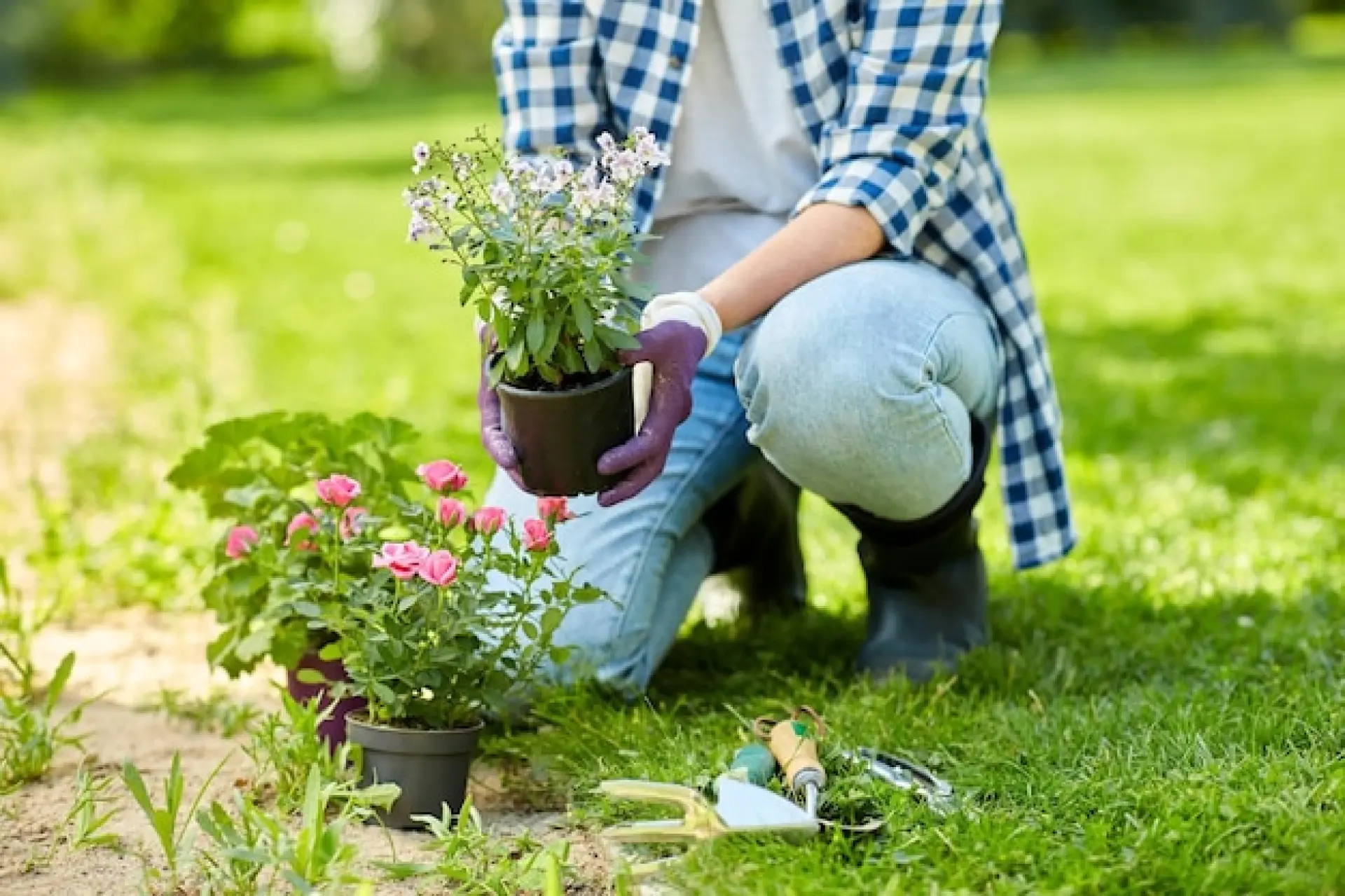
It’s always best to wear gloves that can protect you without making your grip on plants and shrubs too weak. Thick gloves are best for dealing with any thorny plants and rough wood, whereas tighter garden gloves can be better for weeding and small tasks. Wear sturdy shoes or boots with a good grip, especially if you are working on wet grass or slabs.

Think about safe lifting before you move anything heavy. Bend your knees, keep your back straight, and hold items close to your body. If a bag feels too heavy, split it into two smaller bags, or ask someone to help you carry it.
Store tools safely while you work. Make sure not leave them hidden in grass or under leaves where someone could step on them. Place tools together in one spot, ideally on a clear surface, and keep sharp edges facing down or away from paths.
What can go in the garden waste bin
Garden waste bins are usually for natural garden material, but rules can vary by local council. As a general rule, it’s best to add soft plant waste that will break down well. Keep items loose where possible, rather than packed tight.
Grass cuttings, fallen leaves, and small weeds are often accepted. If weeds have seeds or thick roots, you may still be able to add them, but it can increase the chance they survive in the pile. If you are unsure, bag those weeds separately first.
Small twigs and light hedge trimmings are usually fine, especially once they are cut into shorter pieces. Thick branches can be too heavy or too slow to break down, and they may not be collected. Cut woody waste into smaller parts if your bin rules allow it.
Avoid putting soil, stones, rubble, and treated wood into garden waste bins. These can damage machinery and may lead to your bin not being emptied. If you have a lot of mixed waste, keep it aside until you sort it properly.
What can be composted at home
Home composting is a good way to reduce waste and improve your soil. A balanced compost pile usually needs a mix of “green” materials and “brown” materials. Green materials are soft and fresh, and brown materials are dry and woody.
Green materials include grass cuttings in small amounts, soft weeds without seeds, plant trimmings, and faded flowers. It’s a good idea to add grass in thin layers, because thick wet layers can turn slimy, and sometimes they can start to smell bad. Mixing grass with dry leaves or shredded paper can also help.

Brown materials include dry leaves, small twigs, cardboard, and torn paper. These help keep the compost airy and stop it from becoming too wet. If you shred or chop brown material, it breaks down more quickly and mixes more easily.
Avoid composting thorny brambles unless you chop them well and can handle them safely. Also, avoid weeds with lots of seeds or strong, spreading roots unless your compost gets hot enough to kill them. If your compost is slow and cool, those weeds may come back when you use the compost.
What should go to the tip or recycling centre
Some garden waste is not suitable for a garden waste bin or home compost. A tip or recycling centre is often the best place for bulky, mixed, or hard materials. It also helps keep your bins from becoming too heavy.
Large branches, tree trunks, and thick woody waste often need to go to the tip, unless you can store them for log piles or chipping. If you have a lot of wood, check if your local site has a separate area for green waste or wood recycling. Cut pieces down to manageable sizes so they are easier to handle and safer to load.
Items like broken paving slabs, rubble, soil, and stones should usually go to the correct waste section at the recycling centre. These materials can be heavy, so pack them in small amounts and lift with care. Make sure not to mix any rubble with your green waste, as it can cause processing issues.
Damaged garden items like plastic pots, old hosepipes, metal furniture, and treated timber often need recycling or general waste disposal. Some centres separate hard plastics, metal, and wood, so sorting before you leave saves time. If you are unsure where something goes, check your local council guidance before you travel.
If you require Garden Clearance services in Royston, Cambridge or Hertfordshire, contact us today. We can discuss what you would like to be collected and your preferred due date.
We'll get back to you with a free no-obligation quote that matches your budget.